
- Residential Toilet Solutions
- Commercial Toilet Solutions
- Recreational Vehicle (RVs) Toilets
- Camping & Temporary Toilets
- Parts & Accessories
- Consumables By Brand
- Urinals
- Grey Water Technology
- Grease Trap Technology
- Blackwater Technology
- Pump Stations
- Buildings & Facilities












Rural Life With Composting Toilets
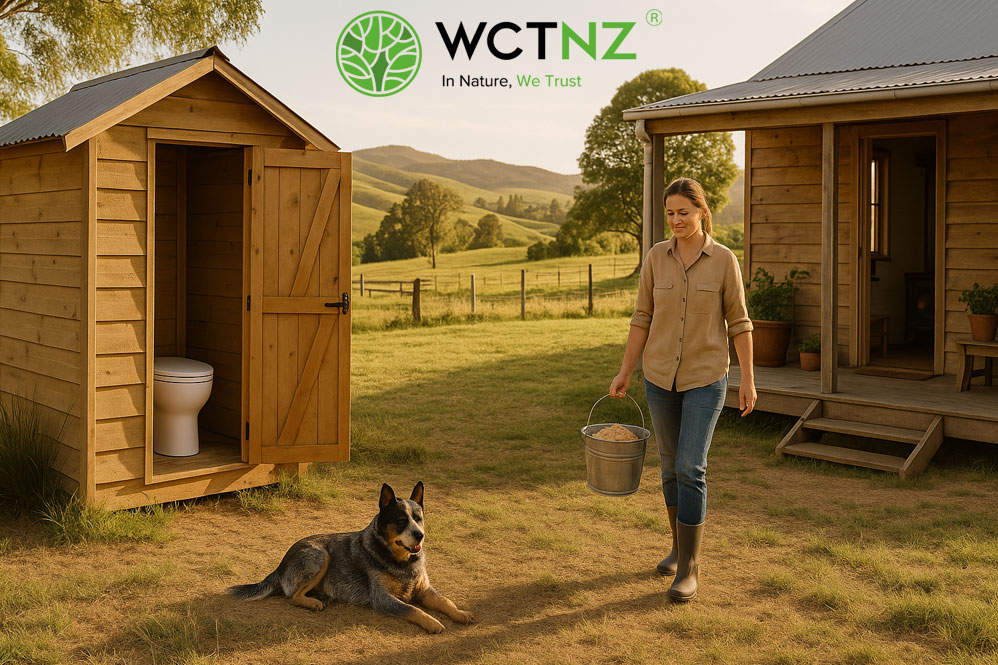
Rural living rewards systems that are simple, durable, and genuinely self-reliant. That is exactly why composting toilets make so much sense on farms, lifestyle blocks, remote homes, and properties where conventional wastewater infrastructure can be costly, awkward, or unnecessary.
In rural New Zealand, people are often closer to the land and more aware of the practical value of reducing water use, simplifying services, and keeping waste treatment onsite and under control. A well-chosen composting toilet fits that mindset naturally.
Wouldn’t you love to have a yarn like this?
"Out here on the farm, it’s just me, the wife, and acres of open land. We love the rural life—fresh air, no neighbours, just the rhythm of nature. We’ve always been off-grid, so a composting toilet was a no-brainer. It’s durable, easy to use, and doesn’t need water or a septic tank, which saves us a fortune. No odours either, thanks to a simple vent we ran through the wall. Every few months, we empty the compost, and it’s like gold for the soil! It’s as simple as mucking out the barn, and it fits our way of living close to the land. This toilet’s made our farm life even more self-sufficient, and that’s what it’s all about out here."
Why Compost in Rural Life?
Rural properties often sit outside the easy convenience of municipal sewer connections, and even when septic is possible, it is not always the most sensible answer. Water supply may be limited, sections may be larger and more varied, and households often want solutions that are robust, low-fuss, and aligned with a more self-sufficient way of living.
Composting toilets suit that environment extremely well. They reduce water demand, remove unnecessary blackwater load, and can simplify sanitation planning for remote or semi-remote sites. More importantly, they do it in a way that feels practical rather than theoretical.
Rural customers are often some of the quickest to “get it”. Once they see that a composting toilet can be clean, low-odour, and easy to manage, the value is obvious: less infrastructure, less water waste, and a system that works with the property instead of against it.
What You Need to Know
Composting toilets do work differently from conventional septic or flush systems, but they still provide the same everyday comfort and hygiene when the right system is chosen and installed well. The best rural installations are the ones that are matched properly to user load, climate, building type, and servicing expectations from the start.
Ventilation still matters
Composting toilets are vented to maintain low-odour use and healthy chamber conditions. Rural installations often have more flexibility in vent layout, but correct positioning is still important.
Capacity must suit the household
Larger families, mixed-use buildings, or farm support spaces may need more chamber volume or a different system type than a lightly used cottage or shed.
Design integration matters
Rural properties vary enormously. The best system choice depends on whether the toilet is for a main house, a worker’s dwelling, a shed, a minor building, or a truly off-grid setup.
Supply and servicing matter too
Rural sites need dependable access to the right bulking materials, care products, and replacement parts. That is why long-term product support matters just as much as the initial sale.
Built for Self-Sufficiency
The appeal of rural composting toilets is not just that they are environmentally sound. It is that they help create a more self-contained and resilient property setup. They reduce the need for unnecessary infrastructure, use no flush water, and align naturally with the values many rural property owners already live by: practicality, stewardship, and independence.
That is why WCTNZ® does not treat rural toilets as generic products. Rural living is too varied for that. The right answer depends on the land, the building, the climate, the number of users, and the way the property is run.
Need help choosing the right rural composting toilet?
WCTNZ® can help you work through system type, user load, servicing expectations, and how the toilet will fit into the wider rural property setup.
Email: sales@wctnz.co.nz
Phone: 0800 022 027
Related WCTNZ® Guidance
Explore the wider WCTNZ® composting toilet knowledge system:
News Letters
Monthly News: Current affairs in NZ wastewater
Monthly Promotion: Special & one-off deals
Monthly The Humanist: Tips, tricks & advice on composting toilets


Customer Service
Socials